It's one of the most common questions we hear on the Treasure Coast: will my insurance pay for this? The honest answer is “it depends on the cause”, but understanding a few basic distinctions will tell you what to expect before you file. (This is general information, not insurance advice; always check your specific policy.)
Sudden & accidental damage is usually covered
Standard Florida homeowners policies typically cover water damage that is 'sudden and accidental', a burst pipe, a failed water heater, a supply line that lets go behind the washing machine, or a roof opened up by a storm. These are the losses most likely to be approved, especially when you act quickly to mitigate further damage.
Gradual leaks and lack of maintenance usually aren't
Damage from a slow, long-term leak or from deferred maintenance is commonly denied, because insurers expect homeowners to address problems before they cause major damage. This is one more reason a fast response matters: a leak caught and documented early looks very different to an adjuster than months of hidden moisture.
Flooding is a separate policy
Here's the big one for coastal Florida: damage from rising water and storm surge, true 'flooding', is generally NOT covered by standard homeowners insurance. It requires a separate flood insurance policy (often through the NFIP). Wind-driven rain that enters through a storm-damaged roof may fall under your homeowners policy, while ground flooding may fall under flood insurance. The distinction matters, and documentation is what settles it.
How to protect your claim
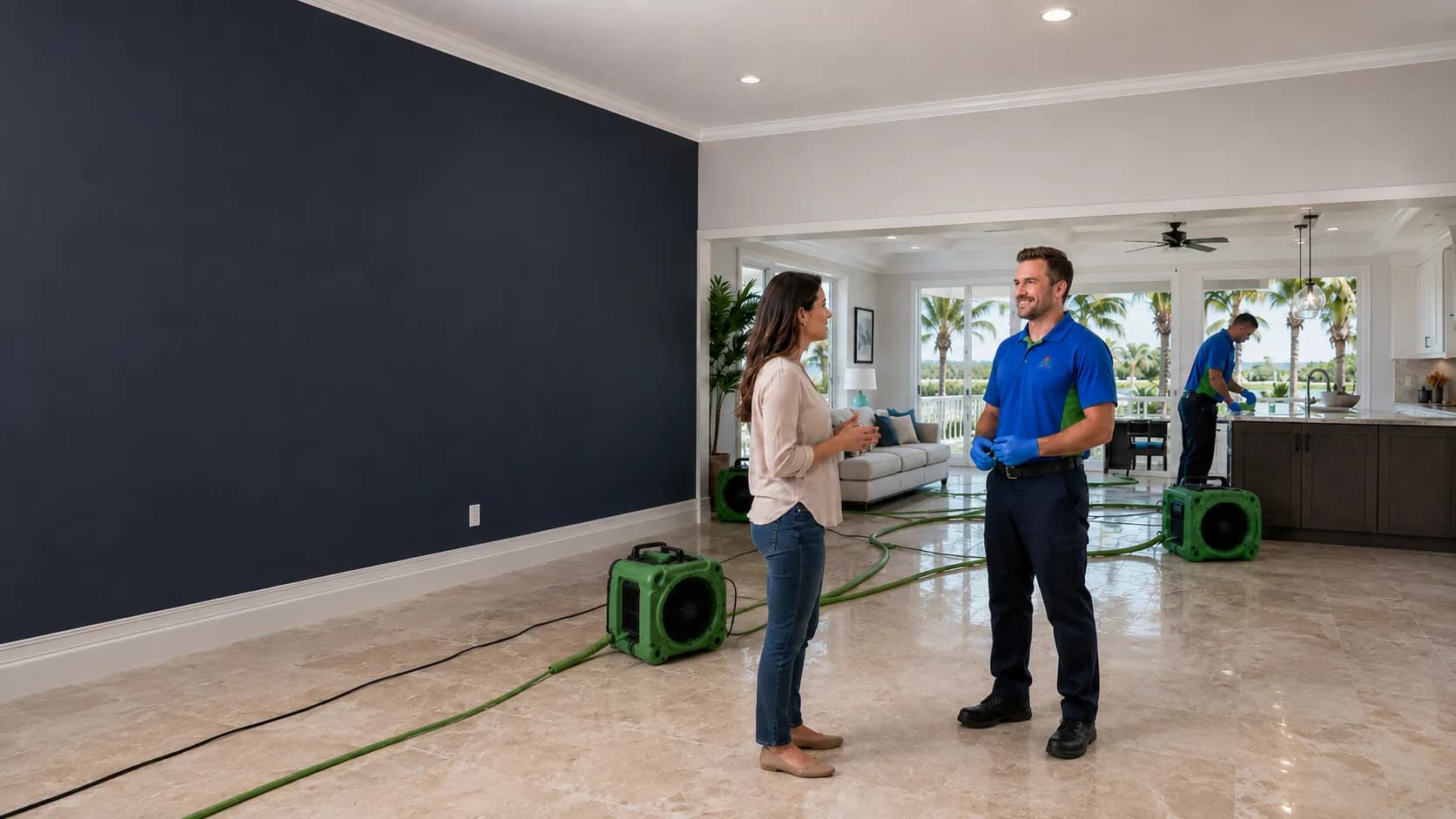
Whatever the cause, three things strengthen a water-damage claim: documenting the loss thoroughly before cleanup, mitigating further damage promptly (insurers expect this), and keeping detailed records of the work performed. A restoration company that documents moisture readings, equipment logs, and a full scope of work, and communicates directly with your adjuster, takes most of that burden off you.
What EZR does on the insurance side
We photograph and measure the damage from the first hour, prepare a detailed scope for your adjuster, and bill your carrier directly. In most covered losses, your only out-of-pocket cost is your deductible. We'll also tell you honestly when a loss looks like it may fall under flood insurance instead.