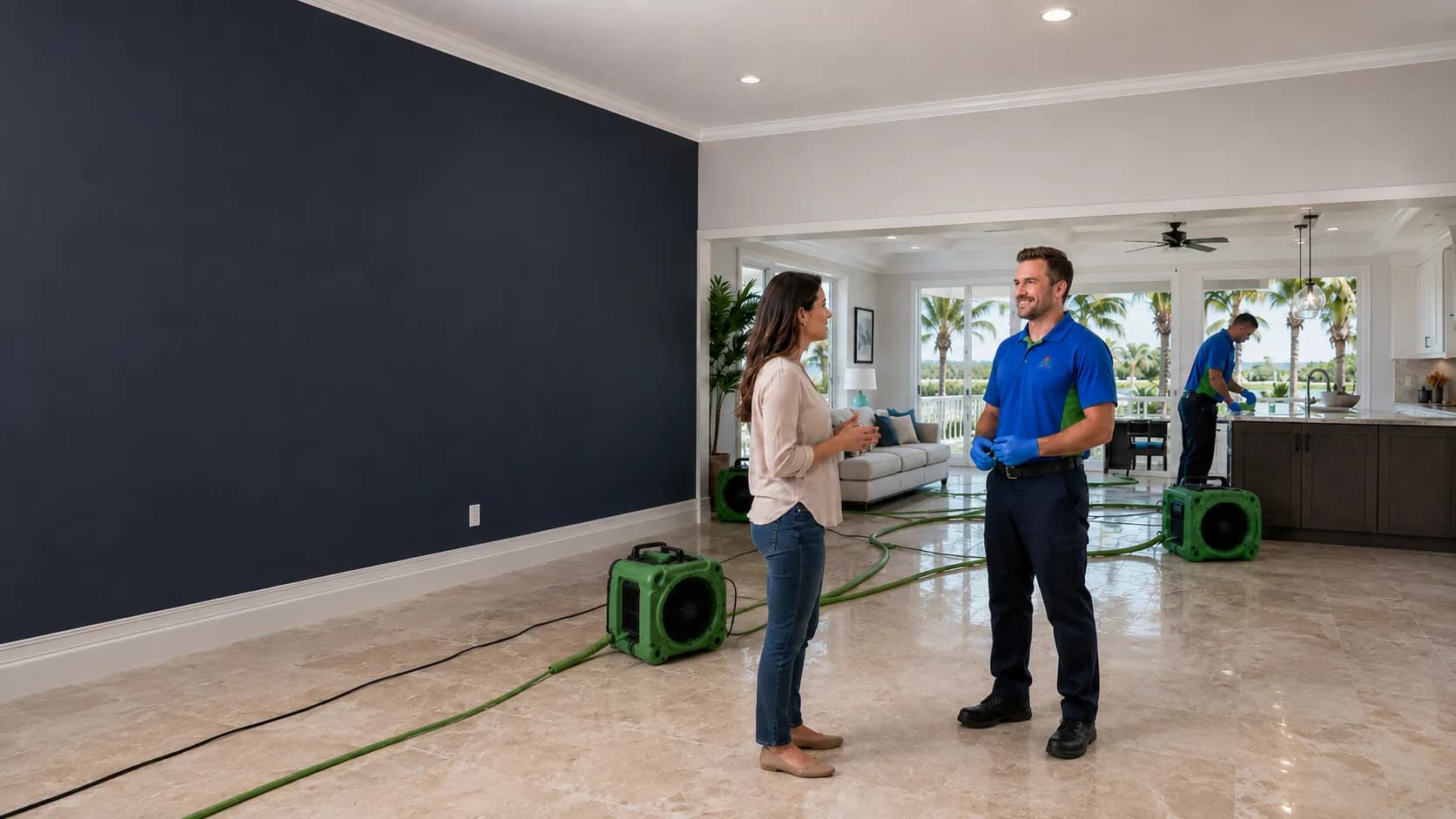
After the standing water is extracted, the most important phase begins: drying out the structure itself. It's the part homeowners ask about most, because it takes days and fills your home with equipment. Here's what's actually happening and why it matters.
Why it takes days, not hours
Water soaks deep into porous materials, drywall, subflooring, framing, insulation. Getting that moisture back out to a safe level is a gradual process governed by physics, not impatience. Rushing or stopping early is exactly what leads to warping and mold weeks later.
The equipment doing the work
You'll see commercial air movers that accelerate evaporation off surfaces, and dehumidifiers that pull that evaporated moisture out of the air so it doesn't just resettle. Positioned correctly, they dry the structure, not just the surfaces you can touch.
Daily monitoring
We return to take moisture readings each day and adjust the equipment based on the data. Drying is measured and verified, not guessed, which is also what gives your insurer confidence the job was done right.
Living with the equipment
The machines are noisy and run continuously, including overnight, please don't turn them off, as every interruption sets the drying back. It's a few days of inconvenience that protects you from a much bigger mold and reconstruction problem.
How we know it's done
We don't pull the equipment until materials reach a verified dry standard confirmed by our meters, not just 'dry to the touch.' That's the difference between a finished job and a future mold call.